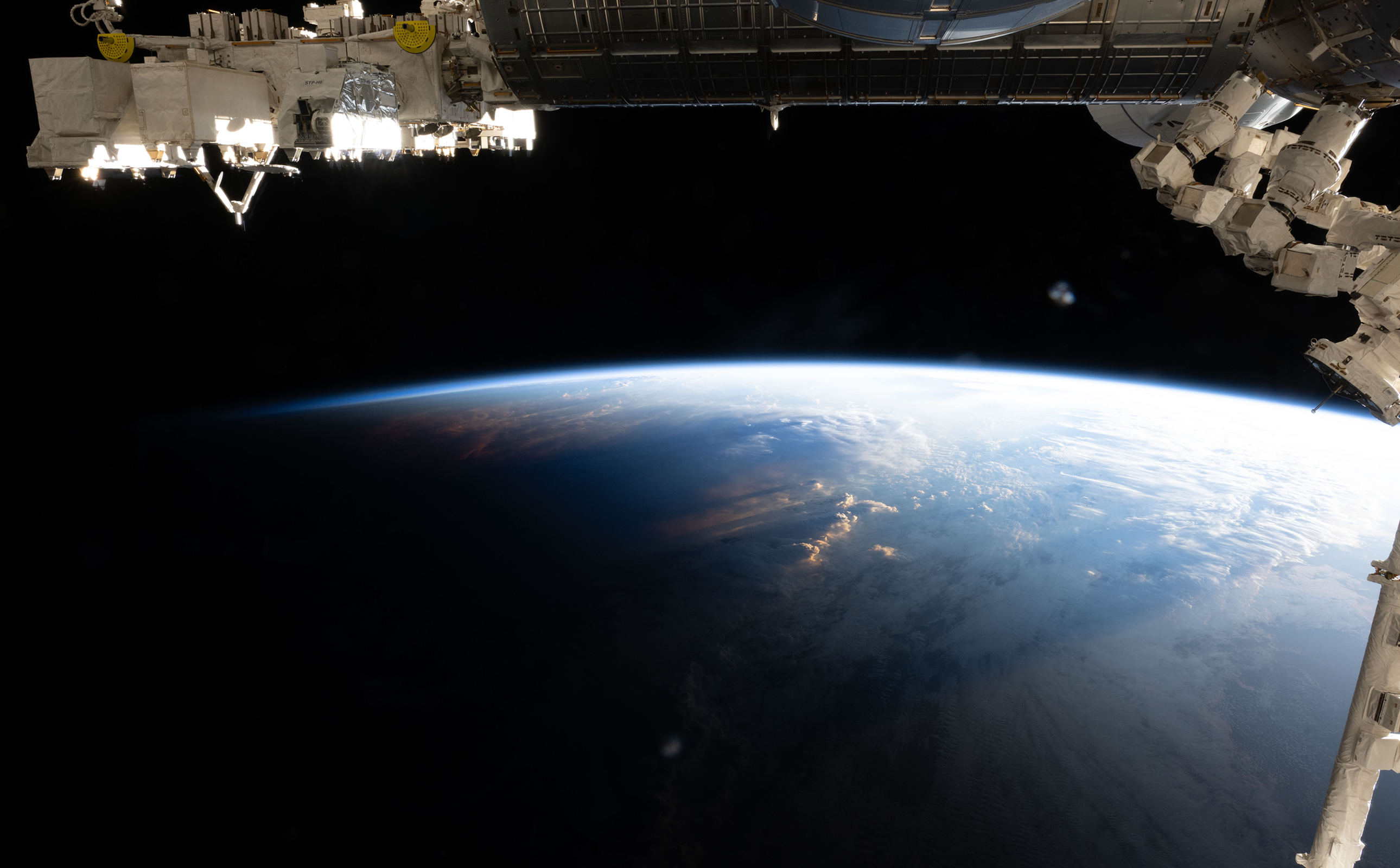
At the Center for the Study of Space Coexistence, we conduct research through diverse approaches, covering fundamental science related to energy, materials, and the environment as well as experimental studies utilizing the space environment.
Here are some of our representative research topics. Here are some of our representative research topics.
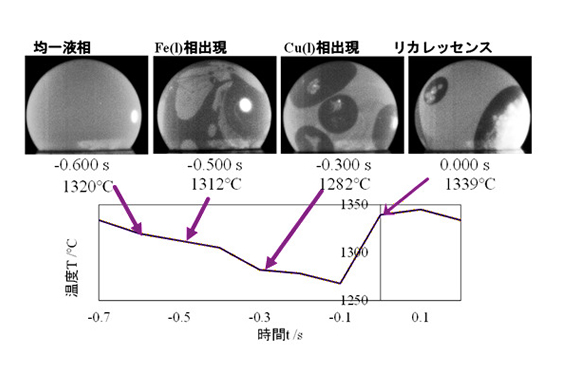
On Earth and in space, materials continuously change their form through melting, phase separation, and crystallization. We focus on non-equilibrium phenomena in high-temperature molten materials and investigate how matter evolves to create new functions and structures.
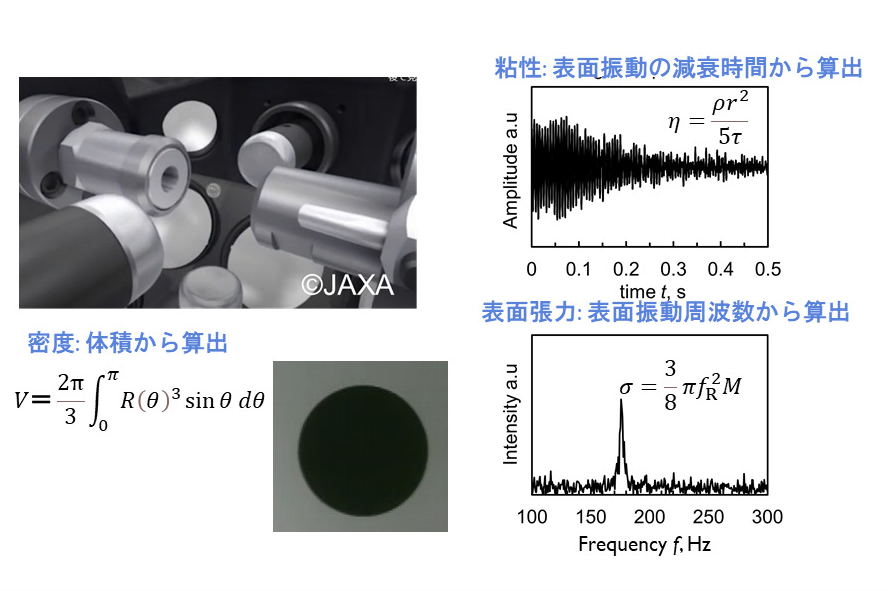
Using containerless levitation techniques for non-contact measurements and in situ observations, we study fundamental processes in high-temperature melts, including thermophysical properties, phase separation, nucleation, and crystal growth. We also actively utilize undercooled and metastable states to develop new functional and energy-related materials.
These studies contribute not only to understanding material circulation within the Earth, but also to advancing materials science under extreme environments, including space environments. We regard non-equilibrium phenomena in high-temperature melts as universal science and aim to clarify the behavior of materials on Earth and in space through their understanding.
When materials melt and solidify, large amounts of thermal energy are exchanged. Latent heat thermal energy storage materials, which store energy by utilizing this heat, are attracting worldwide attention for the stable use of renewable energy.
We have developed a technique for precisely measuring the heat of fusion of high-temperature molten materials using levitation methods. By eliminating contact with containers, this approach suppresses the effects of chemical reactions and impurities, enabling accurate evaluation of the intrinsic energy stored in materials.
Using this technique, we investigate the energy density of high-temperature thermal storage materials such as iron and alloys, while also exploring design guidelines for new thermal energy storage materials that can contribute to future energy systems.
The microgravity environment of space enables us to investigate the properties of high-temperature molten materials in a purer state, free from convection and container-induced effects that are difficult to avoid in ground-based experiments.
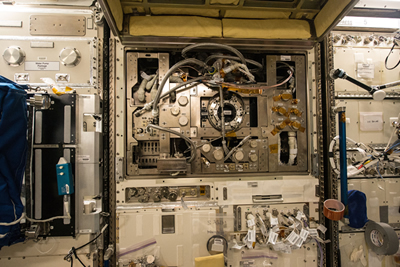
In collaboration with JAXA, we conduct experiments using the Electrostatic Levitation Furnace (ELF) installed in the “Kibo” Japanese Experiment Module on the International Space Station (ISS) to study the thermophysical properties, phase separation, and crystallization processes of high-temperature molten materials.
Through these studies, we aim to understand the behavior of materials in non-equilibrium states that are difficult to achieve through ground-based experiments.
Collaborative Institutions:
Chiba Institute of Technology, Tokyo City University, Toyama Prefectural University, Shibaura Institute of Technology, and JAXA
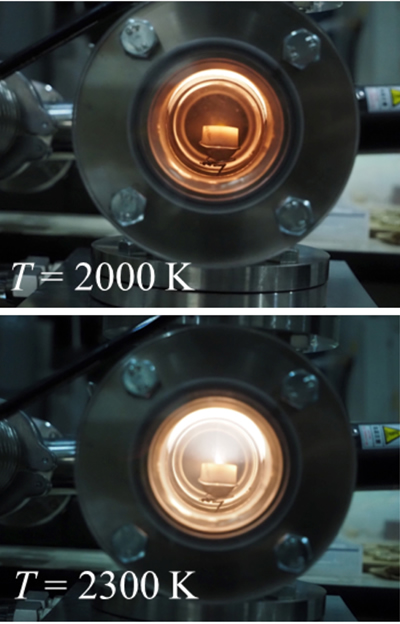
One promising approach for obtaining metals and oxygen from lunar soil, or lunar regolith, is a laser reduction process, in which laser irradiation induces non-equilibrium states and directly reduces or decomposes metal oxides.
In this method, a focused laser creates a localized reaction field with extremely high temperature and high energy density, enabling reactions that are difficult to proceed under thermal equilibrium conditions. The key to success is the careful design of the reaction field, including the laser energy density, irradiation time, and surrounding atmosphere.
We focus on reactions in which metal oxides contained in regolith are separated into metals and oxygen through laser-induced non-equilibrium processes involving melting, evaporation, and plasma formation. Our goal is to elucidate and control the underlying reaction mechanisms.
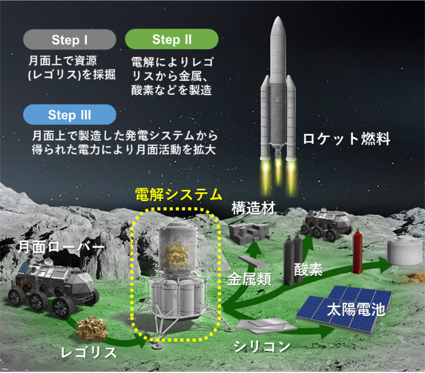
A promising method for obtaining metals and oxygen from lunar soil (lunar regolith) is the high-temperature electrolysis process, in which molten materials are electrolyzed to extract useful resources. The key to this process lies in designing the temperature and composition of the molten “melt” used for electrolysis.
We investigate the high-temperature melts composed of regolith mixed with halide salts, focusing on fundamental properties such as melting temperature, viscosity, and electrical conductivity in order to develop high-temperature electrolysis processes that enable stable and sustainable resource extraction.
In addition to ground-based electrolysis experiments, we also conduct space experiments using the Electrostatic Levitation Furnace (ELF) installed on the International Space Station to obtain accurate thermophysical property data. Through these studies, we aim to establish design guidelines for practical electrolysis systems that can realize in-situ resource utilization (ISRU) on the lunar surface.